


Advanced Dental Implants in Costa Rica: Zygomatic and Subperiosteal Options
Zygomatic and Subperiosteal Implants in Costa Rica
Being told that you have too little bone for standard dental implants does not automatically mean that every implant option has been ruled out. At OG Center in Curridabat, Costa Rica, advanced oral rehabilitation includes assessment for zygomatic implants and customized subperiosteal implants, alongside conventional implant and full-arch treatment options. The starting point is a diagnosis, not a promise that one technique will work for everyone.
This guide explains the differences, the role of digital planning and the questions to bring to your consultation. It is educational information, not an individual treatment recommendation.
What are zygomatic implants?
Zygomatic implants use anchorage in the cheekbone, or zygoma, to help support rehabilitation of the upper jaw. They can be considered for selected patients with substantial upper-jaw bone deficiency, including some patients whose previous implants or bone grafts have failed. They are not the same as standard implants placed in the tooth-bearing jawbone and are not a treatment for lower-jaw atrophy.
The International Team for Implantology consensus recommendations emphasize assessment of the maxilla, cheekbones and sinus health using appropriate three-dimensional imaging. This is complex treatment that requires surgical and restorative expertise. Alternatives, expected maintenance and the patient’s preferences belong in the decision.
What are customized subperiosteal implants?
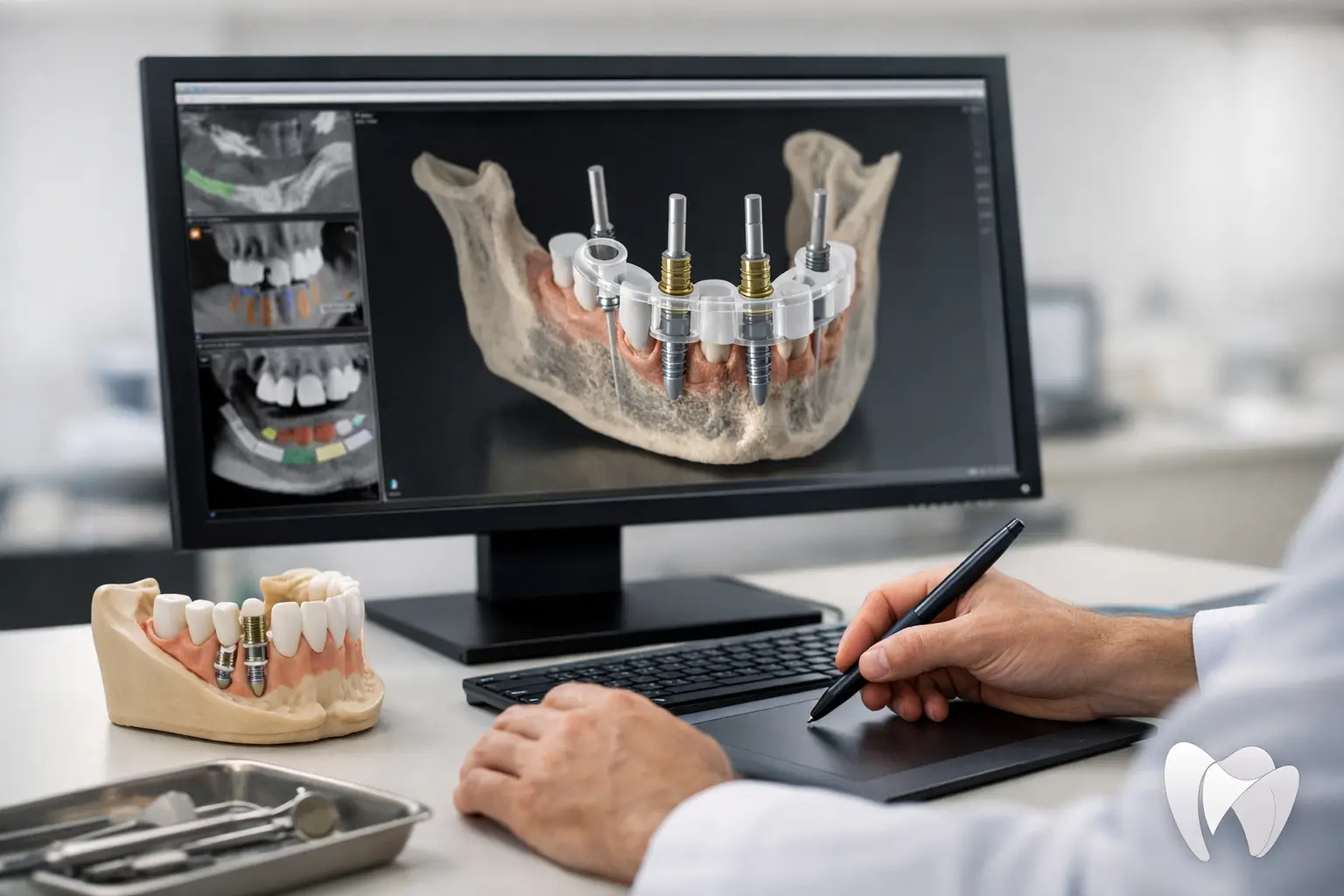
A subperiosteal implant is a framework adapted to the surface of the jawbone beneath the soft tissues, rather than a conventional implant positioned within the jawbone. Modern designs can use digital anatomical data and customized manufacturing. They may be considered in selected cases of severe upper- or lower-jaw atrophy, depending on the anatomy and treatment plan.
Published clinical series describe modern customized frameworks in both the severely atrophic upper jaw and the lower jaw. Results should be interpreted with the size and follow-up of each study in mind. These studies are not OG Center outcome statistics and do not establish that subperiosteal implants are automatically better than other options.
How do these options differ from All-on-4 and All-on-6?
All-on-X full-arch rehabilitation describes replacing an arch of teeth with a restoration supported by several implants. All-on-4 and All-on-6 refer to particular implant-number approaches. Zygomatic and subperiosteal implants describe different anchorage solutions. The terms are not interchangeable, and the most appropriate design cannot be selected from the name or price alone.
Ask which teeth and which arch the proposal covers, why the suggested support is suitable, and whether conventional implants, grafting, another prosthetic design or a removable option should also be considered.
What needs to be checked before treatment?
The consultation should review your health history, medicines, previous dental treatment, oral tissues, available bone and restorative goals. For zygomatic treatment, sinus assessment is particularly important. Bring previous reports or scans when available; the team will determine whether new imaging is needed. Discuss any smoking or relevant medical conditions with the treating clinician.
Risks, recovery and maintenance
Neither approach is risk-free. Zygomatic implant treatment can involve sinus complications, soft-tissue problems, sensory changes and implant or restoration failure. A published ITI consensus report identifies sinusitis as an important complication to discuss. Customized subperiosteal frameworks can also involve soft-tissue exposure, infection or the need for additional treatment; the evidence and follow-up differ between designs and patient groups.
Temporary teeth and definitive restorations are different stages. Early loading is considered only when the clinical conditions and stability allow it. Healing, appointments, hygiene access and long-term maintenance must be planned individually. A patient travelling to Costa Rica should agree on the number of visits and follow-up arrangements before booking travel.
Digital planning at OG Center
Our digital workflow brings together CBCT imaging, Primescan intraoral scanning, Exocad restorative design and an in-house dental laboratory with milling and 3D printing capabilities. These resources support coordination between the clinical and laboratory teams. The technology used at each stage depends on the case; having an in-house laboratory does not mean that every surgical implant or custom framework is manufactured there.
Questions patients often ask
Can I avoid a bone graft?
Some patients can be assessed for alternatives to staged grafting. Whether that is appropriate depends on the anatomy, restorative goals, risks and available alternatives. It cannot be confirmed from a message or photograph alone.
Which option is best for me?
No technique is best for every person. Ask the clinician to explain the reason for the proposed approach, alternatives, foreseeable complications and maintenance requirements.
How much does treatment cost?
A personalized estimate should specify the arch or arches treated, studies, surgery, provisional and definitive restorations, follow-up and any additional procedures. Do not assume that a standard All-on-4 price also covers zygomatic or customized subperiosteal treatment.
Request an evaluation in Costa Rica
Request a personalized evaluation at OG Center or contact WhatsApp +506 6181 9808. Our team can explain the information needed for an assessment. Please do not send medical records or identification documents through an open website comment.
Editorial update: October 13, 2026. Clinical sources are linked in the relevant sections. Research findings are not a guarantee of individual results. Diagnosis, treatment selection and informed consent require assessment by the treating dental professional.