


How Much Does It Cost to Replace a Tooth With an Implant?
A missing tooth can change more than a smile. It can affect chewing comfort, speech, bite balance, and the confidence to laugh or speak freely in professional and social settings. When patients ask, “how much does it cost to replace a tooth with an implant,” the most accurate answer is that the price depends on the clinical foundation beneath the visible tooth – not just the implant crown seen in the mirror.
A properly planned dental implant is a long-term restoration made to function, feel, and look like a natural tooth. The treatment is highly individualized because no two sites have the same bone quality, gum condition, bite forces, or aesthetic requirements. That is why a thoughtful treatment plan matters more than a one-size-fits-all price.
How Much Does It Cost to Replace a Tooth With an Implant?
For a single missing tooth, dental implant treatment is commonly priced as several connected clinical stages: diagnosis and planning, implant placement, healing and integration, an abutment, and the final custom crown. In the United States, a complete single-tooth implant restoration often ranges from approximately $3,000 to $6,000 or more. Complex cases can exceed that range when bone grafting, sinus treatment, sedation, or additional periodontal care is needed.
In Costa Rica, patients may find lower overall treatment costs than in many U.S. cities, particularly when care is delivered through an integrated clinic with digital planning and in-house restorative coordination. However, the right comparison is not simply implant versus implant. It is the complete clinical process, materials used, precision of placement, quality of the final crown, and level of follow-up care.
A low initial quote may exclude essential components. Before deciding, patients should confirm whether the estimate includes diagnostic imaging, the implant fixture, surgical placement, healing components, the abutment, the final crown, and any necessary grafting. A complete plan offers a clearer view of the actual investment.
What Is Included in a Complete Implant Treatment?
A dental implant is not a single product. It is a restorative system designed to replace both the root and the visible portion of a missing tooth.
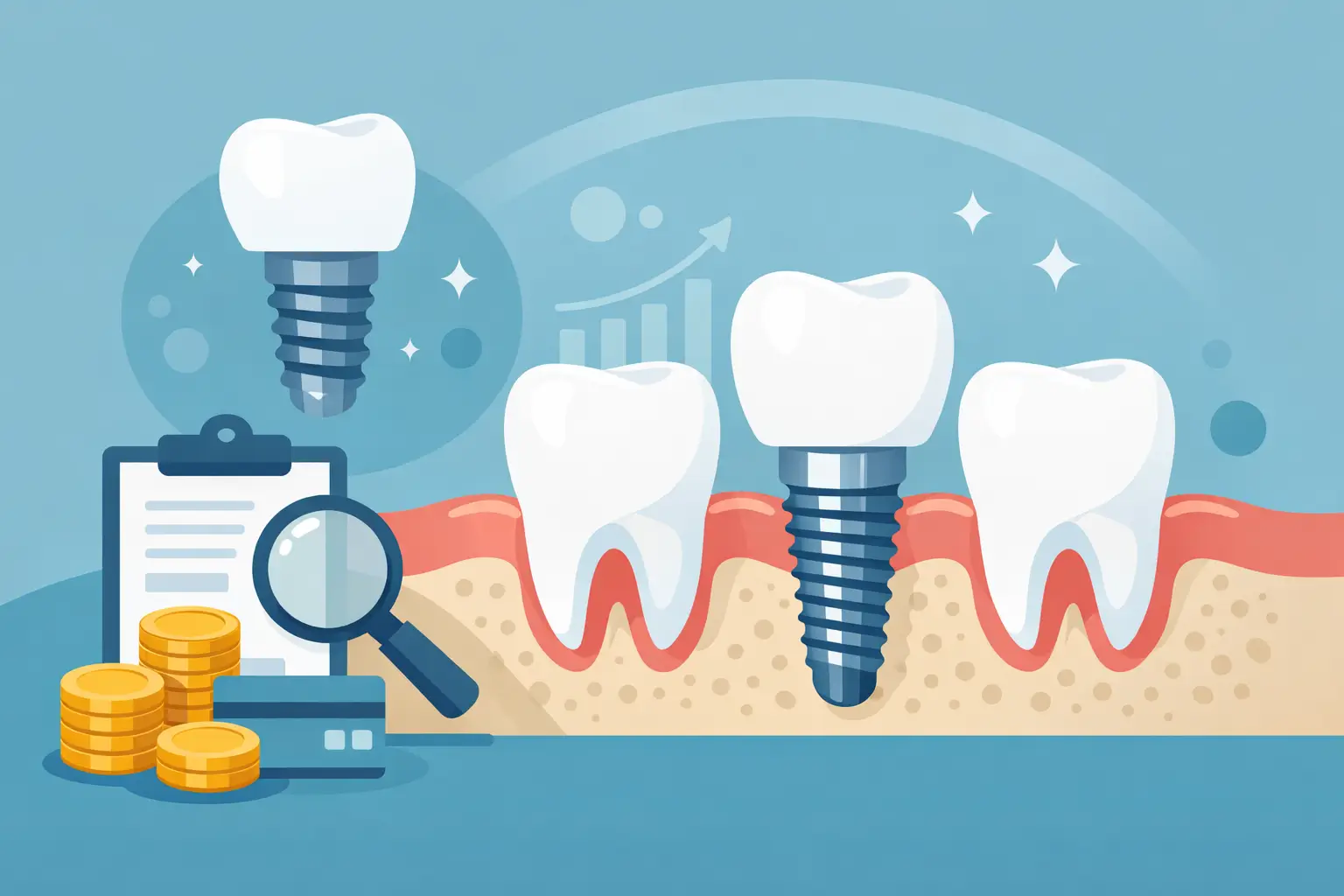
The implant fixture is a small biocompatible post placed in the jawbone. Over time, it integrates with the bone and creates a stable foundation. Once the area has healed appropriately, the clinician connects an abutment, which supports the final crown. The crown is custom designed to blend with the neighboring teeth in shape, color, proportion, and bite function.
High-quality treatment also begins before surgery. Modern diagnostics may include a clinical examination, digital scans, photographs, bite analysis, and 3D imaging. These records allow the dental team to evaluate bone volume, identify important anatomical structures, plan the ideal implant angle, and anticipate the aesthetic result.
For front teeth, this planning is particularly significant. The final outcome depends on much more than replacing a gap. It must preserve or recreate natural gum contours and ensure the crown harmonizes with the surrounding smile. A precision-first approach protects both appearance and long-term function.
The Factors That Change the Price of a Tooth Implant
The health of the implant site has the greatest influence on cost. If a tooth was lost recently and the bone and gums are healthy, treatment may be more straightforward. If the tooth has been missing for years, the jawbone may have resorbed, making additional preparation necessary before an implant can be placed securely.
Bone Grafting and Site Preparation
Bone grafting can be recommended when there is not enough bone to support the implant. The procedure helps rebuild volume and create a stronger foundation for the restoration. Depending on the extent of bone loss, grafting may be performed at the time of extraction, before implant surgery, or alongside implant placement.
For upper back teeth, the maxillary sinus can also limit available bone height. A sinus lift may be needed in select cases. These procedures add time, materials, and clinical complexity, but they can make a stable implant restoration possible where it otherwise would not be.
The Position of the Missing Tooth
A front-tooth implant often requires elevated aesthetic planning because even small differences in gum height, crown color, or tooth angle can be visible when a patient smiles. Back-tooth implants must manage significant chewing forces and require precise bite adjustment. Both demand expertise, but each presents different clinical priorities.
Materials and Restorative Design
The final crown can be made from different high-quality ceramic materials based on the location of the tooth, the patient’s bite, and cosmetic goals. The abutment may also be customized for improved gum support and crown emergence. These details can affect the investment, especially in highly visible areas where natural translucency and precise contours matter.
An implant is a structural restoration, not a cosmetic add-on. Choosing appropriate materials and a well-designed crown can help protect the surrounding teeth, support healthy gums, and create a result that feels natural in everyday life.
Digital Technology and Clinical Expertise
Digital dentistry can improve predictability at every stage. Three-dimensional imaging and digital planning help position the implant according to the available bone, restorative design, and facial aesthetics. Digital impressions can improve comfort and support precise communication between the surgical and restorative phases.
Technology does not replace clinical judgment. It gives an experienced team better information for planning treatment. The real value is a coordinated process where implant surgery, restorative design, bite function, and aesthetic details are considered together rather than handled as separate decisions.
Why the Cheapest Implant Option Can Cost More Later
An implant that is poorly positioned may be difficult to restore, hard to clean, or exposed to excessive bite pressure. A crown that does not fit properly can create food trapping, discomfort, gum irritation, or uneven wear. Correcting those complications can involve additional procedures, replacement components, and lost time.
That does not mean every patient needs the most expensive treatment option. It means the plan should be clinically appropriate for the site and transparent about what is included. Patients deserve to understand the proposed materials, diagnostic process, anticipated treatment timeline, and any factors that could change the final fee.
For patients traveling for care, coordination is equally important. Implant treatment often requires more than one visit because the implant needs time to integrate with the bone before the final crown is placed. In selected cases, an immediate temporary tooth may be possible, but it is not appropriate for every patient. The treatment schedule should be based on biology and stability, not convenience alone.
Is an Implant Worth the Investment?
For many patients, a dental implant is worth considering because it replaces a missing tooth without requiring adjacent teeth to be reduced for a traditional bridge. It can restore chewing efficiency, support bite stability, and help limit the bone loss that can occur after a tooth is lost.
An implant also has an aesthetic value that is difficult to separate from daily confidence. A custom crown designed with the surrounding teeth in mind can make the smile look complete again without the movement or removal associated with a removable partial denture.
Still, implants are not automatically the right solution for every situation. A fixed bridge, removable option, or other restorative approach may be more suitable depending on oral health, budget, timeline, and the condition of nearby teeth. A comprehensive consultation should present the options clearly rather than assuming one treatment is right for everyone.
Questions to Ask Before You Accept an Implant Estimate
Ask whether the fee includes the surgical implant, abutment, and final crown. Clarify whether 3D imaging and digital scans are included, and whether bone grafting may be necessary. It is also reasonable to ask who will plan the surgical and restorative phases, what materials will be used, and how the bite and appearance will be evaluated before the final crown is delivered.
At OG Center Healthcare, implant planning is approached as a complete restorative process, with digital diagnostics and individualized treatment design supporting each stage. The goal is not simply to fill a space. It is to create a stable, healthy, and natural-looking result that supports the way you eat, speak, and smile.
The best next step is a professional evaluation that looks beyond a price range. A clear digital assessment can show what your specific tooth replacement requires and help you choose a solution designed for lasting comfort, function, and confidence.